The Sacraments
"The saving words and deeds of Jesus Christ are the foundation of what he would communicate in the Sacraments through the ministers of the Church. Guided by the Holy Spirit, the Church recognizes the existence of Seven Sacraments instituted by the Lord. They are the Sacraments of Initiation (Baptism, Confirmation, the Eucharist), the Sacraments of Healing (Penance and the Anointing of the Sick), and the Sacraments at the Service of Communion (Marriage and Holy Orders). Through the Sacraments, God shares his holiness with us so that we, in turn, can make the world holier."
~USCCB
Click on the Sacrament You Want to Learn About!
Sacraments of Christian Initiation
Baptism
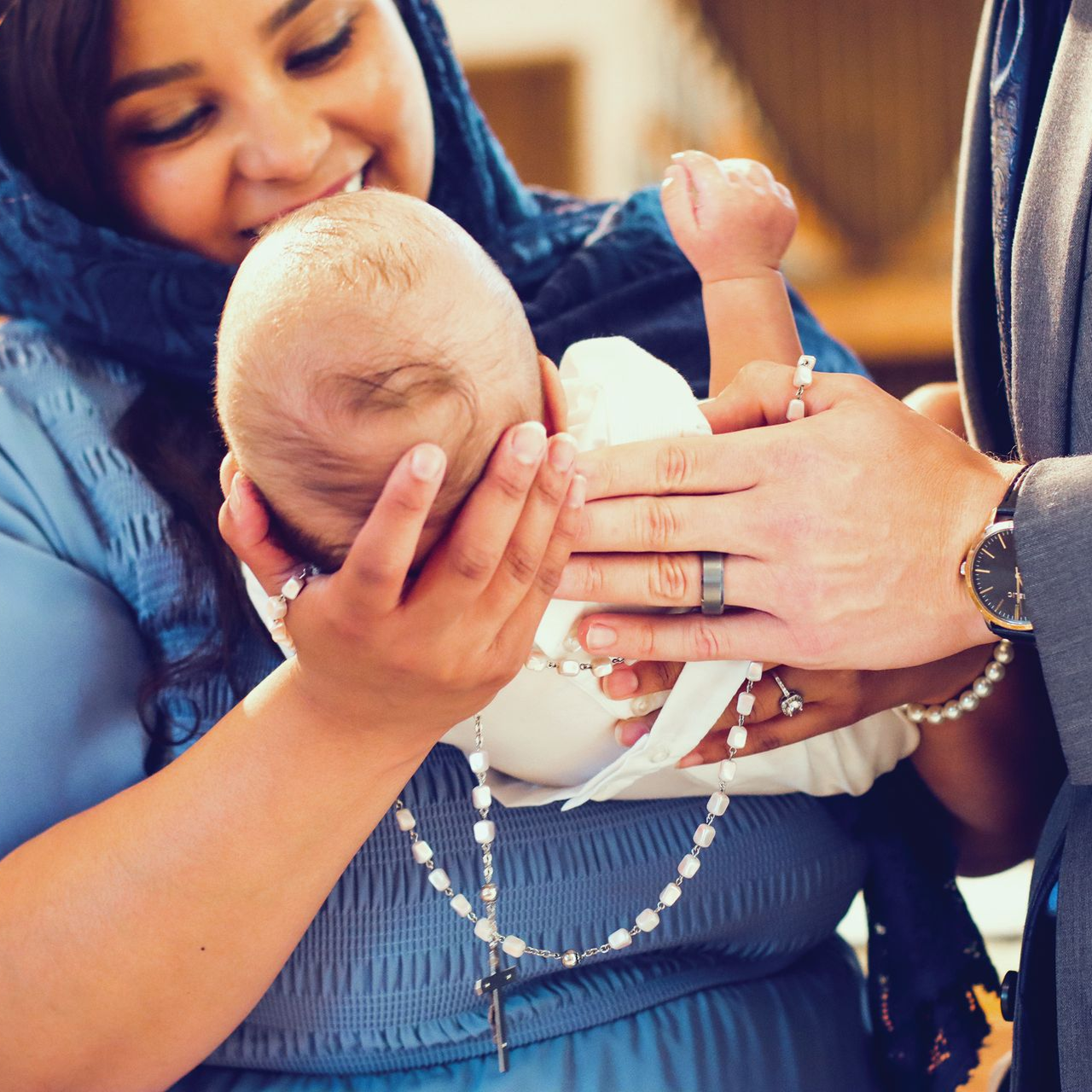
The origin and foundation of Christian Baptism is Jesus. Before starting his public ministry, Jesus submitted himself to the baptism given by John the Baptist. The waters did not purify him; he cleansed the waters. . . . Jesus did not need to be baptized because he was totally faithful to the will of his Father and free from sin. However, he wanted to show his solidarity with human beings in order to reconcile them to the Father. By commanding his disciples to baptize all nations, he established the means by which people would die to sin – Original and actual – and begin to live a new life with God.
In Baptism, the Holy Spirit moves us to answer Christ's call to holiness. In Baptism, we are asked to walk by the light of Christ and to trust in his wisdom. We are invited to submit our hearts to Christ with ever deeper love.
~from the United States Catholic Catechism for Adults
Except by special appointment, Infant Baptism is celebrated on the second Sunday of each month. Parents must attend a two-hour preparation class prior to the Baptism of their first child. Please contact the Parish Office for help setting this up!
Adult Baptism must be completed through the Order of Christian Initiation of Adults (OCIA). Please contact the Faith Formation Office to begin the process!
Confirmation
The prophets of the Old Testament foretold that God's Spirit would rest upon the Messiah to sustain his mission. Their prophecy was fulfilled when Jesus the Messiah was conceived by the Spirit and born of the Virgin Mary. The Holy Spirit descended on Jesus on the occasion of his baptism by John. Jesus' entire mission occurred in communion with the Spirit. Before he died, Jesus promised that the Spirit would be given to the Apostles and to the entire Church. After his death, he was raised by the Father in the power of the Spirit.
Confirmation deepens our baptismal life that calls us to be missionary witnesses of Jesus Christ in our families, neighborhoods, society, and the world. . . . We receive the message of faith in a deeper and more intensive manner with great emphasis given to the person of Jesus Christ, who asked the Father to give the Holy Spirit to the Church for building up the community in loving service.
~from the United States Catholic Catechism for Adults
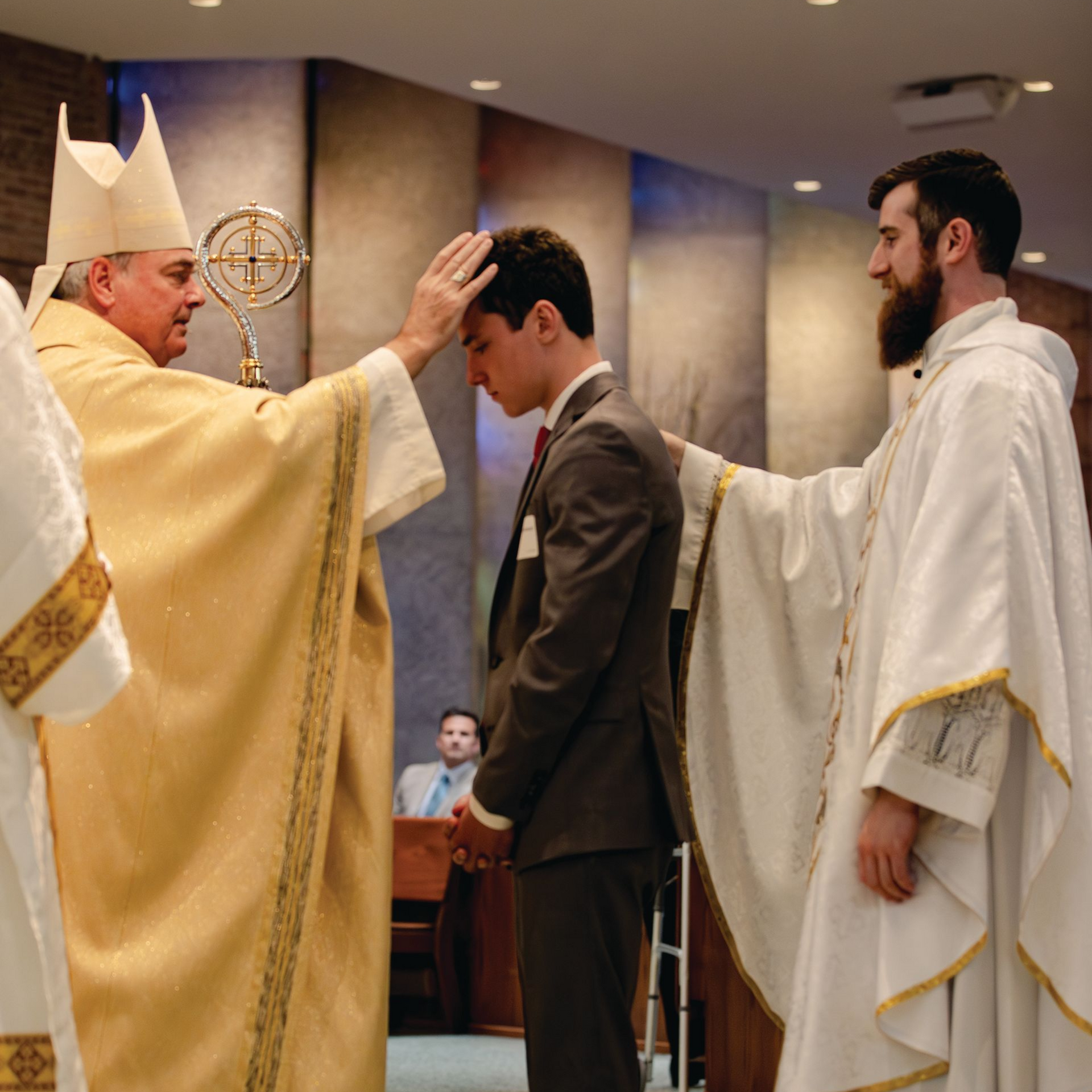
Through the laying of hands and anointing with Holy Chrism Oil, Confirmandi (those receiving Confirmation) are sealed with the Holy Spirit, and enter deeper into a more mature faith in the Catholic Church. If you are seeking the Sacrament of Confirmation for your child, they must complete the required Faith Formation Classes or have permission from the Pastor. Adults seeking the Sacrament of Confirmation must receive preparation through OCIA. To take the next step, contact our Faith Formation Office!
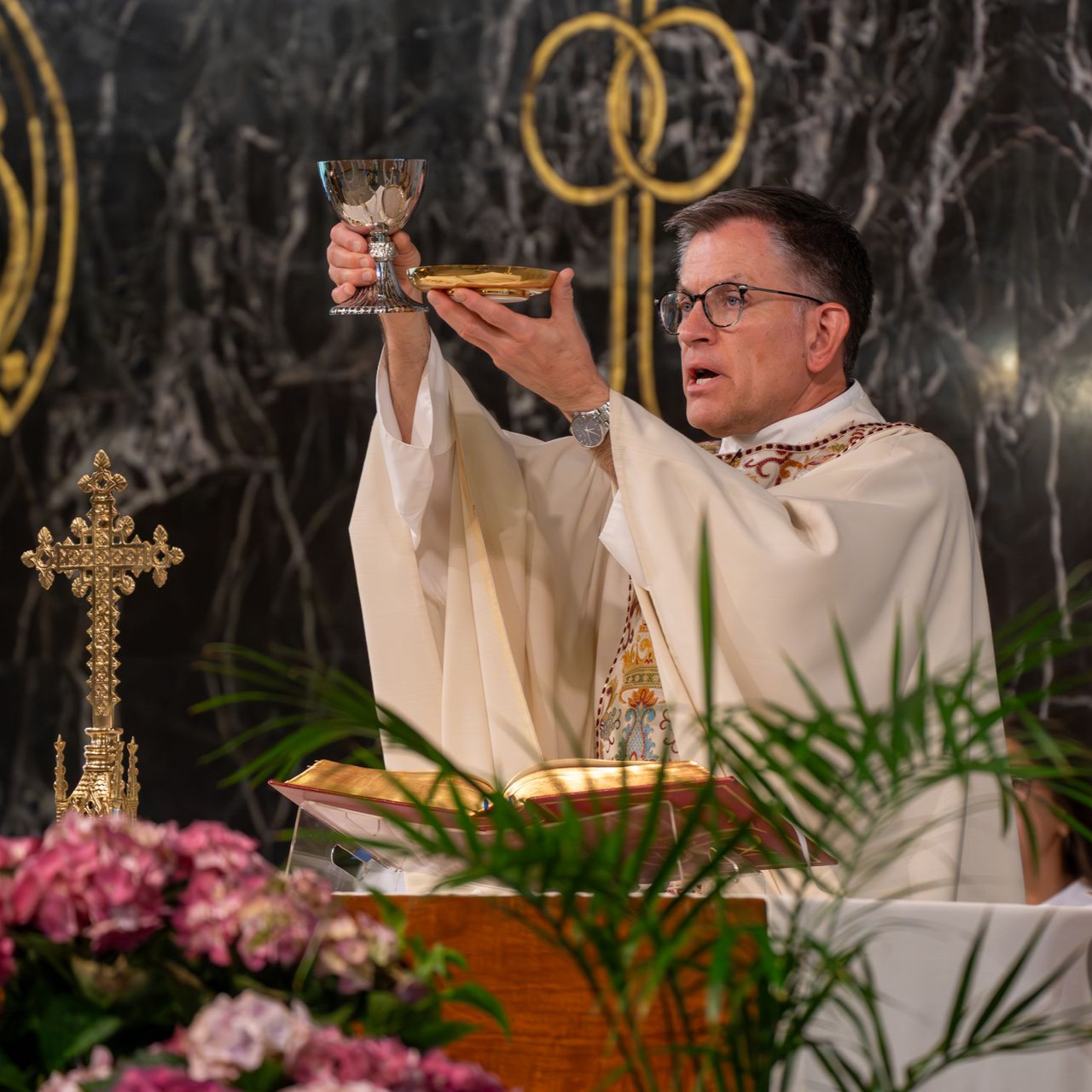
The Eucharist
In the celebration of the Eucharist, bread and wine become the Body and Blood of Jesus Christ through the power of the Holy Spirit and the instrumentality of the priest. The whole Christ is truly present -- body, blood, soul, and divinity -- under the appearances of bread and wine, the glorified Christ who rose from the dead. This is what the Church means when she speaks of the "Real Presence" of Christ in the Eucharist.
Jesus gives himself to us in the Eucharist as spiritual nourishment because he loves us. By eating the Body and drinking the Blood of Christ in the Eucharist, we become united to the person of Christ through his humanity.
The transformed bread and wine [during the Mass] are truly the Body and Blood of Christ and are not merely symbols. When Christ said “This is my body” and “This is my blood,” the bread and wine are transubstantiated. Though the bread and wine appear the same to our human faculties, they are actually the real body and blood of Jesus.
~USCCB
Because of the nature of this Sacrament, good preparation is essential! If you are seeking First Holy Communion for your child, they must complete the required Faith Formation Classes or have permission from the Pastor. Adults seeking First Holy Communion must receive preparation through OCIA. To take the next step, contact our Faith Formation Office!
Sacraments of Healing
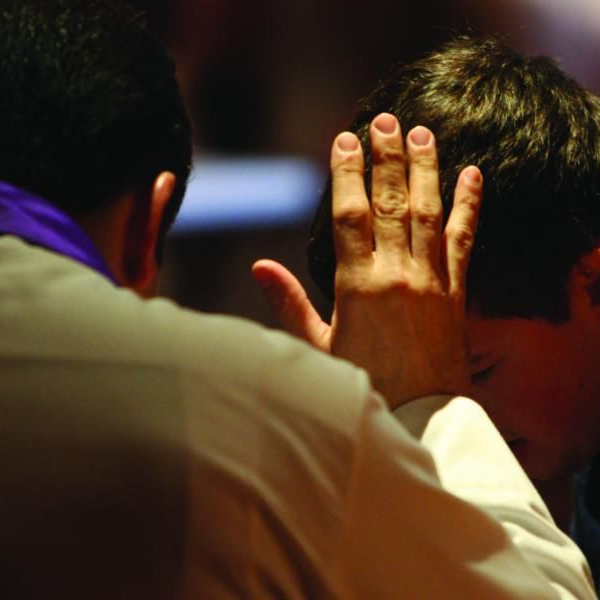
Penance
Not only does it [the Sacrament of Penance] free us from our sins but it also challenges us to have the same kind of compassion and forgiveness for those who sin against us. We are liberated to be forgivers. We obtain new insight into the words of the Prayer of St. Francis: "It is in pardoning that we are pardoned."
Jesus entrusted the ministry of reconciliation to the Church. The Sacrament of Penance is God's gift to us so that any sin committed after Baptism can be forgiven. In confession we have the opportunity to repent and recover the grace of friendship with God. It is a holy moment in which we place ourselves in his presence and honestly acknowledge our sins, especially mortal sins. With absolution, we are reconciled to God and the Church. The Sacrament helps us stay close to the truth that we cannot live without God. "In him we live and move and have our being" (Acts 17:28).
~from the United States Catholic Catechism for Adults
The Sacrament of Penance is the ordinary way for baptized Catholics to receive forgiveness, or absolution, of sins. As Catholics, we are required to confess serious or grave (mortal) sins at least once a year (CCC 1457), but even if we haven't sinned gravely, regular reception of this Sacrament can rightly be considered as essential to growth in holiness. At St. Colette, the Sacrament of Penance, through individual confession, is offered every Saturday from 2-2:45pm, in the Church. Additional times and dates are available during special liturgical seasons (i.e. Advent, Lent, etc.) or by special appointment.
Parents seeking First Reconciliation/Penance should contact our Faith Formation Office!
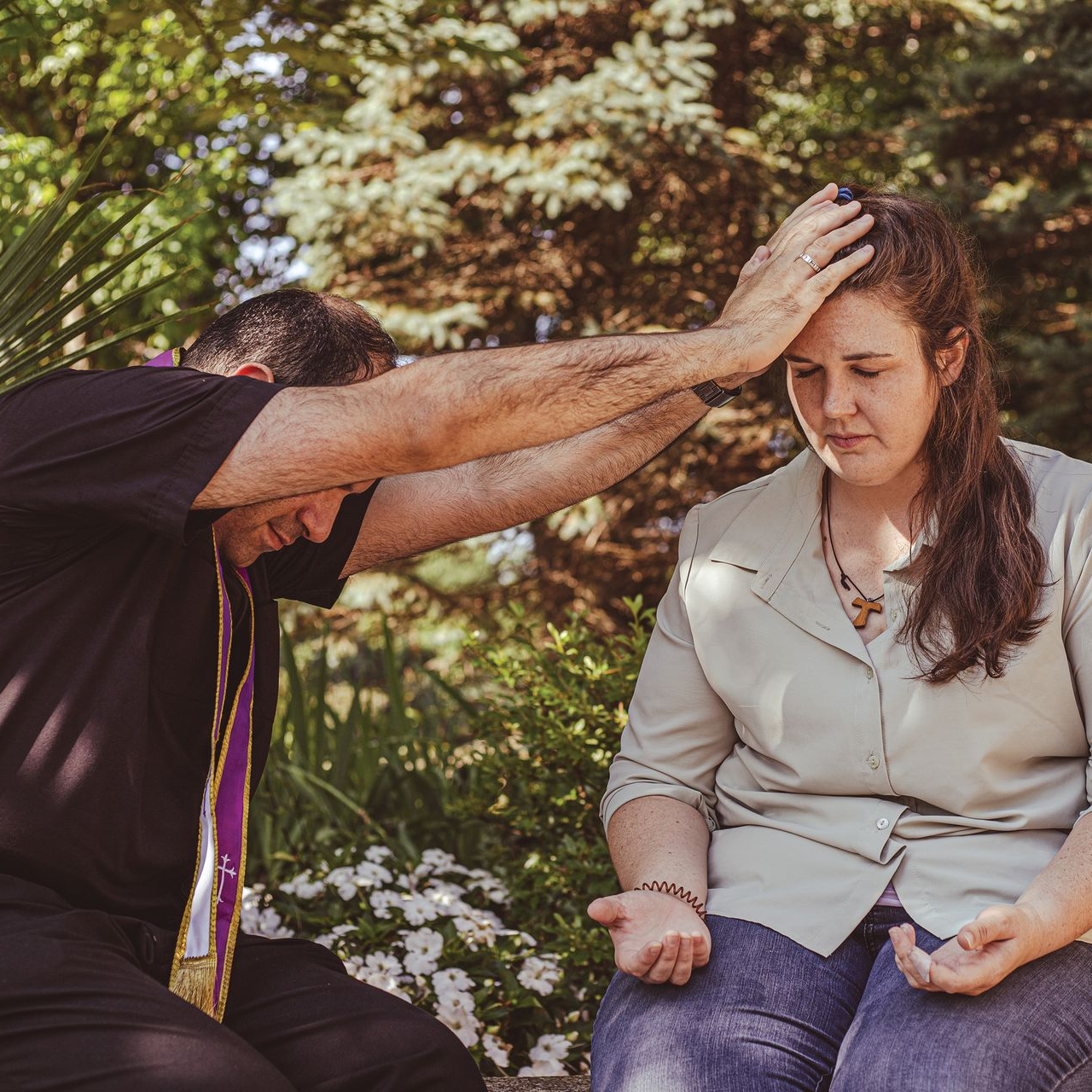
Anointing of The Sick
In the Church's Sacrament of Anointing of the Sick, through the ministry of the priest, it is Jesus who touches the sick to heal them from sin – and sometimes even from physical ailment. His cures were signs of the arrival of the Kingdom of God. The core message of his healing tells us of his plan to conquer sin and death by his dying and rising.
The Rite of Anointing tells us there is no need to wait until a person is at the point of death to receive the Sacrament. A careful judgment about the serious nature of the illness is sufficient.
When the Sacrament of Anointing of the Sick is given, the hoped-for effect is that, if it be God's will, the person be physically healed of illness. But even if there is no physical healing, the primary effect of the Sacrament is a spiritual healing by which the sick person receives the Holy Spirit's gift of peace and courage to deal with the difficulties that accompany serious illness or the frailty of old age.
~from the United States Catholic Catechism for Adults
Anointing of the Sick is administered by a priest or bishop through a special rite and the anointing of the sick person with oil. While it often is celebrated in homes or in healthcare/nursing facilities, it is a Sacrament which can be administered in a variety of places, to any seriously ill Catholic who has attained the age of reason. It is not necessary for the recipient to be at the point of death to receive Anointing of the Sick!
The Sacrament of Anointing of the Sick can be given through appointment, by contacting the Parish Office. Additionally (unless otherwise noted), St. Colette Catholic Church hosts communal Anointing of the Sick in the church, after the 12pm Mass on every first-Sunday of each month.
Sacraments of Service
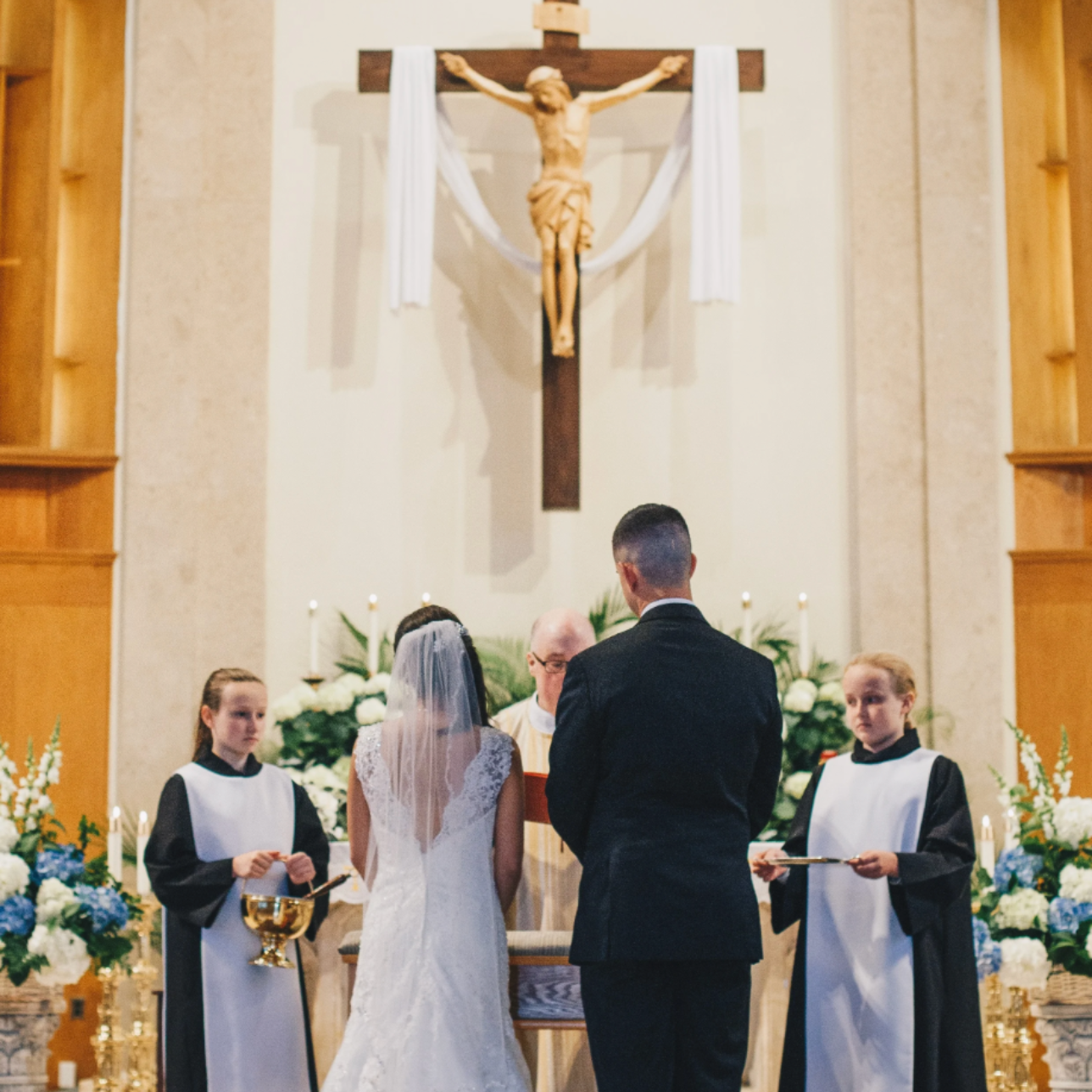
Matrimony
Sacred Scripture begins with the creation and union of man and woman and ends with "the wedding feast of the Lamb" (Rev 19:7, 9). Scripture often refers to marriage, its origin and purpose, the meaning God gave to it, and its renewal in the covenant made by Jesus with his Church. Man and woman were created for each other.
By their marriage, the couple witnesses Christ's spousal love for the Church. One of the Nuptial Blessings in the liturgical celebration of marriage refers to this in saying, "Father, you have made the union of man and wife so holy a mystery that it symbolizes the marriage of Christ and his Church."
The Sacrament of Marriage is a covenant, which is more than a contract. Covenant always expresses a relationship between persons. The marriage covenant refers to the relationship between the husband and wife, a permanent union of persons capable of knowing and loving each other and God. The celebration of marriage is also a liturgical act, appropriately held in a public liturgy at church. Catholics are urged to celebrate their marriage within the Eucharistic Liturgy.
~from the United States Catholic Catechism for Adults
Couples wishing to arrange their wedding, here at St. Colette, should first contact the Parish Office to set up an in-person meeting with the Pastor. It is important that this meeting be in-person with the actual couple looking to be married (not parents, friends, family, etc.)
If you, or a family member, is registered at St. Colette Catholic Church, as a parishioner, you can request a wedding date. Please keep in mind that the Bishops of Michigan request a period of 6 months of preparation, before marriage in the Catholic Church. Please contact the Parish Office to request a date.
Holy Orders
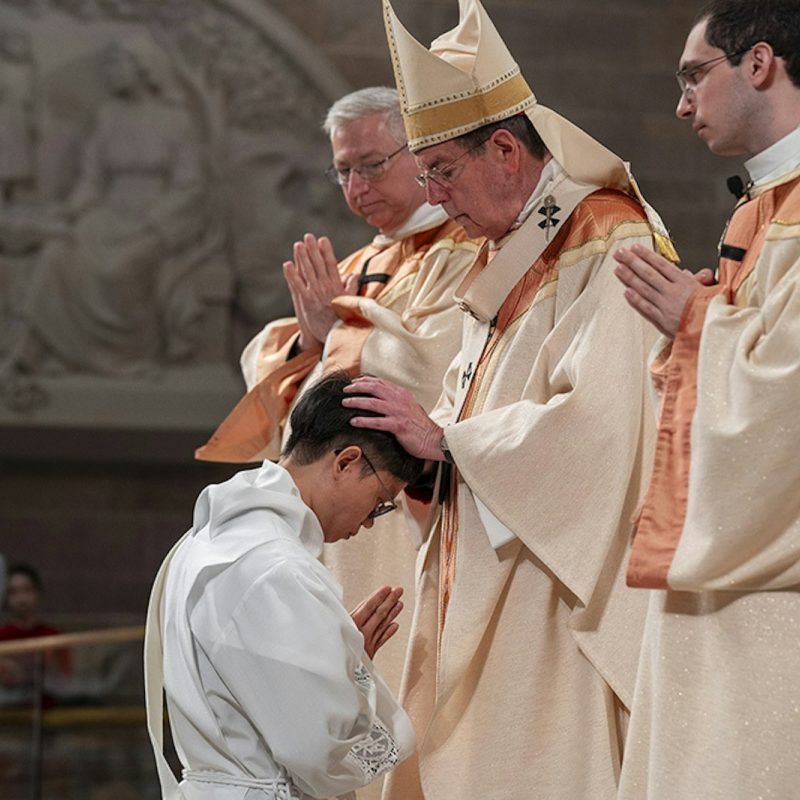
From the moment of Jesus' conception in the womb of Mary until his Resurrection, he was filled with the Holy Spirit. In biblical language, he was anointed by the Holy Spirit and thus established by God the Father as our high priest. As Risen Lord, he remains our high priest. . . . While all the baptized share in Christ's priesthood, the ministerial priesthood shares this through the Sacrament of Holy Orders in a special way.
"Here I am, send me." (Is 6:8) Ordination to the priesthood is always a call and a gift from God. Christ reminded his Apostles that they needed to ask the Lord of the harvest to send laborers into the harvest. Those who seek priesthood respond generously to God's call using the words of the prophet, "Here I am, send me" (Is 6:8). This call from God can be recognized and understood from the daily signs that disclose his will to those in charge of discerning the vocation of the candidate.
~from the United States Catholic Catechism for Adults
Resources